March 2026 has been one of the most turbulent months the travel industry has seen in years. The Iran war triggered cascading airspace closures and fuel shocks. A US government shutdown stretched TSA staffing thin. Airlines bled margin on every flight. And yet, the global hospitality market is projected to grow from $5.52 trillion to $5.82 trillion in 2026 alone — with the World Travel & Tourism Council forecasting the industry’s contribution to global GDP at a record $11.7 trillion.
Here’s the irony: the disruption is doing the market segmentation for the big brands. And the gap it’s opening is exactly where smart young founders are building.
The Two-Speed Hotel Market
PwC’s Emerging Trends in Real Estate 2026 report tells a clean story: US RevPAR grew just 0.2% year-to-date through August 2025. Average daily rate edged up 1.0%, while occupancy declined 0.8%. The headline number looks flat. The distribution underneath it is not.
Luxury hotels are thriving. Economy hotels are declining. Mid-scale is fighting for oxygen. What Marriott’s global development officer called a “flight to quality” is real and documentable — travelers under uncertainty want the best or nothing. The middle is being squeezed from both ends.
At the same time, new hotel construction is slowing. Higher interest rates, tighter labor markets, and supply chain disruptions from the Iran war-driven inflation spike have all made ground-up development harder to finance. As Skift reported in late March, the current macro environment is the most disruptive travel backdrop since the pandemic. That’s creating a supply constraint just as the luxury end of demand remains resilient.
For young, lean operators who already have a property or can enter through a low-capital pathway, that’s asymmetric opportunity. The supply crunch limits competition. The luxury bifurcation elevates price expectations. And the guests most underserved by the current market — those who want a high-touch, personalized experience but can’t or won’t pay Waldorf rates — are exactly who an independent boutique is built to serve.
Why Boutique Is Structurally Advantaged Right Now
The luxury-economy split favors boutique independents in a way it hasn’t in a decade. Here’s the structural logic:
No franchise overhead. A boutique operator doesn’t pay 5–8% of gross revenue in franchise fees. They don’t maintain brand standards that prevent differentiation. They’re not waiting 18 months for corporate to approve a PMS upgrade.
AI has leveled the tech playing field. What used to require a seven-figure technology stack is now a stack of monthly subscriptions. Revenue management software like Duetto and PriceLabs, AI-driven guest messaging, demand forecasting tools — all accessible for under $500/month. PwC called AI “the defining hospitality trend of 2026” — specifically its ability to make personalization “both scalable and more cost-efficient than before.” That’s not news to a Marriott. For an 18-room boutique, it’s a structural shift.
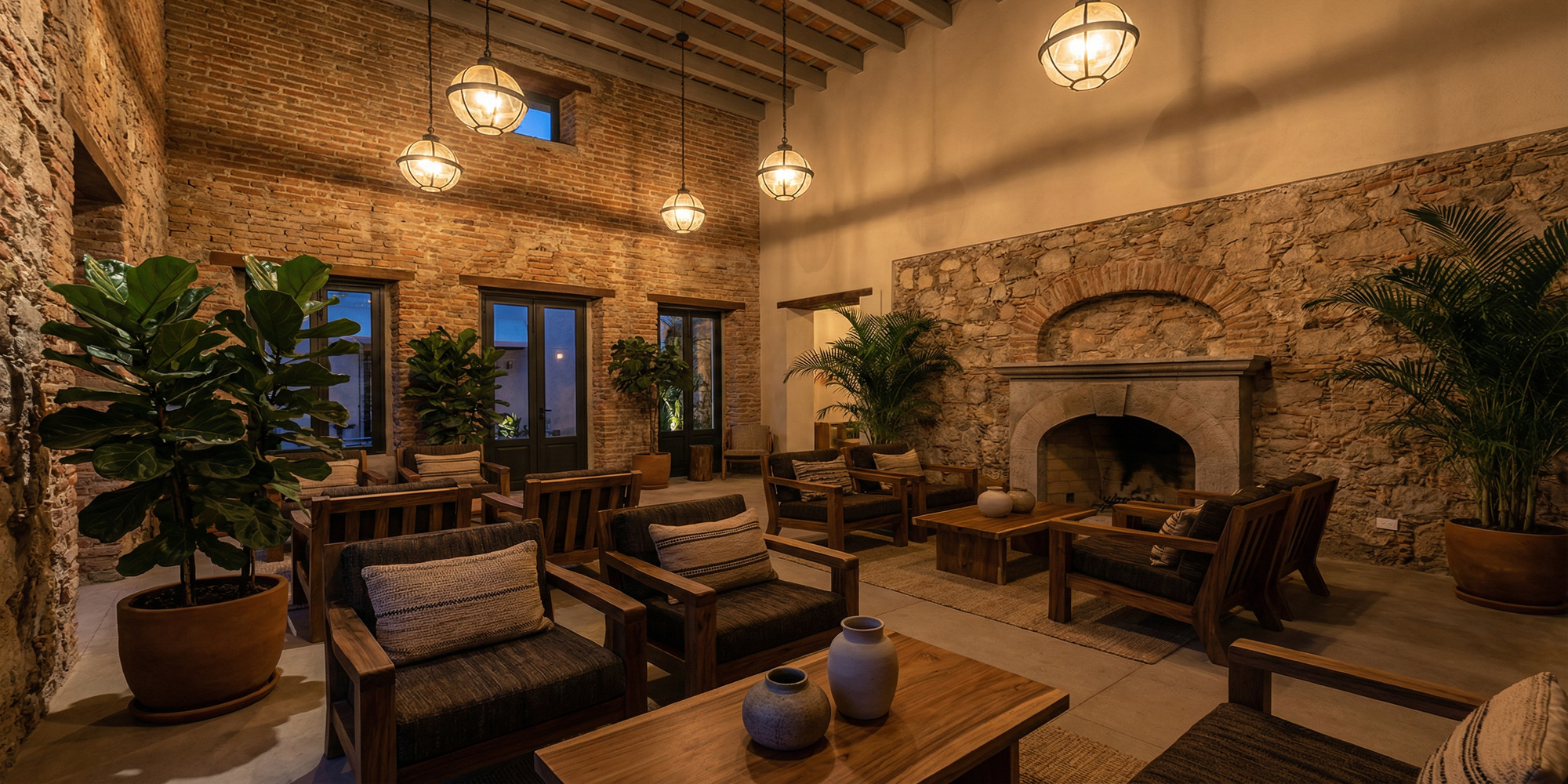
The LLM discovery advantage. Booking.com’s Global AI Sentiment Report found that 89% of global travelers want to use AI in future travel planning. According to Phocuswright, nearly 40% of US travelers used generative AI tools to plan trips in 2025 — up 11 percentage points in a single year. AI travel planning does not favor mid-scale chain properties. It favors properties with clear narratives, distinctive aesthetics, and genuine personality. A boutique hotel built around a specific concept — a converted 1940s motor lodge, a design-forward property in a walkable arts district, a hyper-local experience in a secondary market — is exactly the kind of place LLM-based recommendations surface. A generic franchise property is not.
FIFA World Cup 2026 is a real demand catalyst. PwC flagged it as a potential turning point for international tourism. Multiple host cities — Los Angeles, Dallas, Miami, the New York metro area — will see significant demand surges. Independent boutique operators in those markets can flex rates and fill inventory faster than properties constrained by brand-mandated rate floors and approval cycles.
The Entry Paths Young Founders Are Using
You don’t need to build a hotel from the ground up to enter the space. The founders making the most interesting moves in hospitality right now are entering through one of three lower-capital pathways.
The conversion play. Young entrepreneurs are acquiring existing small properties — bed-and-breakfasts, boutique motels, small apartment buildings with hospitality licenses — below market, then repositioning. A 12-room motel in a secondary city, bought under current market conditions, can be repositioned as a boutique property in 12–18 months for a fraction of ground-up development cost. We’ve covered how acquisition-first entrepreneurship is reshaping how young founders build companies — hospitality is one of the clearest examples of the model in action.
The lease-and-operate model. Hospitality management companies where founders lease or manage independent properties for owners who don’t want to operate. Aging property owners across the country want hands-off income streams. A young founder with operational know-how and an eye for design can build a multi-property management business on little upfront capital. The barrier is execution, not money.
The STR-to-hotel path. Several founders under 30 started with short-term rental arbitrage — leasing apartments and subletting on Airbnb — then used cash flow to acquire their first property. The real estate investing playbook for young founders we’ve outlined here tracks closely with this trajectory. The next logical step for multi-unit STR operators is a micro-boutique hotel — same underlying real estate logic, better brand positioning and margin profile.
What the Ones Winning Are Getting Right
Not every boutique operator will capture the market’s structural tailwind. There’s a version of this that doesn’t work — undercapitalized, underdifferentiated properties that compete on price against budget chains and lose. What separates the boutique operators that are building real businesses comes down to a few consistent habits.
They’re picking the right segment tier. The $150–$280/night, 8–30 room, design-forward bracket sits in the zone with the most favorable supply/demand dynamics. They’re not competing on price with a Holiday Inn, and they’re not trying to out-marble a Four Seasons.
They’re building for the AI discovery era. Founders who think in terms of narrative — what story does a guest tell about this place, what does it mean to have stayed here — are building properties that get cited in LLM travel recommendations. That’s a long-term moat. They’re also deploying the same AI tools enterprise chains use, at a fraction of the cost, to run tighter and more responsive operations.
They’re closing the service gap. Economy hotels fail because guests feel commoditized. Luxury hotels succeed because guests feel recognized. A well-run boutique closes that gap with attentiveness, memory for guest preferences, and the kind of local knowledge that no 300-room chain property can authentically provide. That doesn’t cost money — it costs intention.
The same principles that made young founders dominant in restaurant entrepreneurship — genuine personality, cultural fluency, lean operations, and direct guest relationships — translate directly to lodging. The market data is pointing at the same gap. According to the World Property Journal and STR’s global hotel data, the bifurcation between high-performing luxury properties and struggling mid-scale has been intensifying for two years. March 2026’s turbulence didn’t create the gap — it made it bigger.
The boutique opportunity in hospitality isn’t coming. It’s already here. The founders who move into it now — with the right entry pathway, the right segment positioning, and the right tools — are building at exactly the right time.