
The short answer
A lawn care business mows, edges and tidies yards for neighbors and local property owners, usually on a repeating schedule. Many young people start with a family mower, a trimmer, a rake and safety gear, and the American Academy of Pediatrics generally recommends that children be at least 12 to operate a walk-behind mower. Chemical treatments are generally left to licensed applicators, and noise and registration rules vary by city.
- Age guide From about 12 for a walk-behind mower, with an adult involved
- Startup cost Moderate: a mower, a trimmer and safety gear
- Season Busiest while the grass is growing; weather decides
- Skill level Easy to learn; safe habits matter most
Free one-page starter sheet (PDF)
This article is general information for founders, not legal, tax, or financial advice. Rules, fees, and filing requirements vary by state and change over time. Nothing here creates a professional relationship of any kind. Confirm anything that affects your business with your state's filing office and a qualified attorney or accountant before you act on it.
Many young founders involve a parent or guardian from the start, since rules about contracts, bank accounts and online accounts often depend on age.
What is a lawn care business?
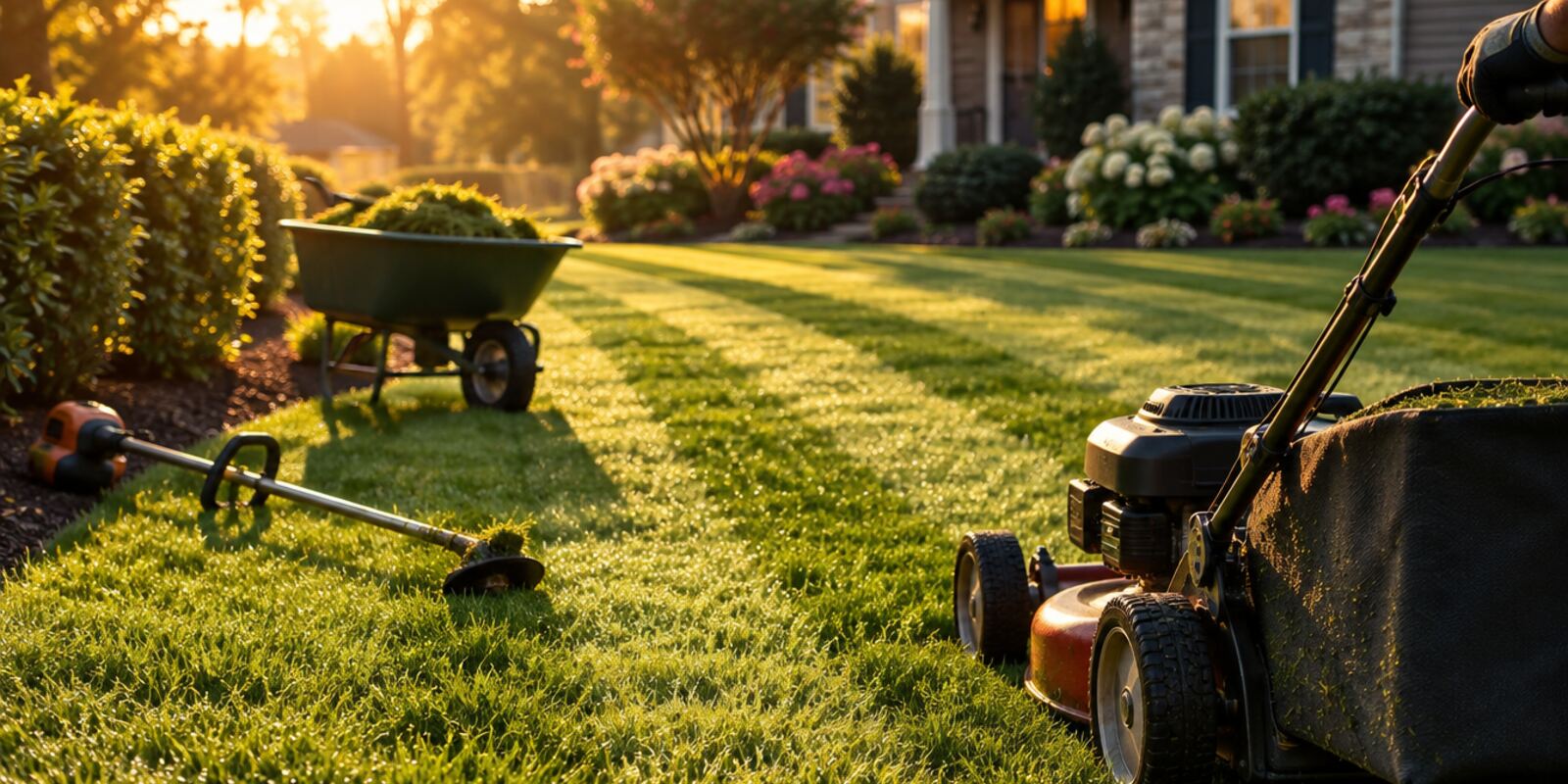
A lawn care business takes regular yard work off a property owner’s list. For most young founders that means mowing, edging, trimming and tidying lawns for neighbors, family friends and small local businesses, often on a repeating weekly or every-other-week schedule. Because the main tools are a mower and a few hand tools, and many people already have access to them, it appears often on lists of low-cost businesses for young people. Fertilizer and weed treatments are a different, more regulated kind of work.
How do you start a lawn care business?
The order below is a typical flow, not a rule. Some founders price before they practice, and some skip steps until the first customer asks.
-
Learn the equipment with an adult
Many young people begin on their own family's lawn, with an adult who knows the mower, after reading the manual. The American Academy of Pediatrics also says a young person should show maturity, good judgment, strength and coordination before learning to mow.
-
Decide what a visit includes
Write down exactly what each visit covers, such as mowing, edging, trimming, raking and bagging clippings, so every customer gets the same thing. Chemical treatments are generally a separate, licensed kind of work.
-
Make a pre-mow routine
AAP and CPSC guidance both describe picking up stones and toys before mowing and keeping children off the lawn, and AAP adds refueling outdoors. A routine that is the same every time is easier to keep.
-
Work out a starting price
Add up fuel and equipment wear per yard, how long a yard takes including travel, and what an hour of the founder's time should be worth. The result is a starting point that can change after the first few visits.
-
Check the paperwork with an adult
Registration, insurance, noise rules and tax questions often depend on age and location. A parent or guardian, the city or county business office and an accountant can say what applies.
-
Find the first customers
Neighbors, family friends and nearby small businesses are where many young founders begin. A friendly message, a clear list of what a visit includes and a few before and after photos usually do the job.
What equipment do you need to start a lawn care business?
Most young founders begin with a short list and add equipment only once customers are asking for more.
Many people start with
- A walk-behind mower, owned or borrowed, and an adult who knows it
- A string trimmer or hand clippers
- A rake, a broom and yard-waste bags
- Eye and hearing protection and sturdy closed-toe shoes
Often added later
- An edger and a blower
- A trailer or another way to carry equipment
- A second mower, spare blades and a sharpening routine
- Business insurance and simple branding
Is lawn care a good fit for you?
Often a good fit if you
- like outdoor, physical work and seeing a finished result
- can name a few neighbors who might want regular mowing
- have an adult who can help with equipment, storage and transport
Worth thinking twice if you
- would find a seasonal, weather-dependent schedule stressful
- are not yet comfortable following engine and blade safety routines
- live somewhere with tight noise limits or neighborhood rules on equipment
How old do you have to be to run a mower for pay?
There is no single answer, because several different sources speak to different parts of the question.
Safety guidance. The American Academy of Pediatrics generally recommends that children be at least 12 years old to operate a walk-behind power mower and at least 16 to operate a ride-on mower, and adds that a young person should also show the maturity, good judgment, strength and coordination the job requires. The same page says older children and teens are most often hurt while cutting lawns as chores or as a way to earn money. It lists the basics that most guidance repeats: eye and hearing protection, sturdy shoes that cover the toes, and stopping the engine and waiting for the blades to stop before clearing a jam. (AAP page updated April 2025.)
Federal child labor rules. These are a separate question. Under 29 CFR 570.33, the U.S. Department of Labor lists power-driven lawn mowers, trimmers, cutters, weed-eaters and edgers among the machinery that employees aged 14 and 15 may not operate, while allowing grounds maintenance that does not use that equipment. The rules are written about employees and employers. Whether a particular young person counts as self-employed or as an employee depends on the facts, and state rules can be stricter, so families who are unsure often ask their state labor agency.
Contracts and money. Rules about contracts, bank accounts and payment apps often depend on age, which is one reason many young founders involve a parent or guardian from the start. The Business Ideas guide covers that in more detail.
How do lawn care businesses work out a price?
Pricing is arithmetic more than a guess. A common approach is to add the cost of fuel and equipment wear for one yard to the time one yard takes, including travel and cleanup, multiplied by the hourly pay the founder wants, then compare the result with what nearby businesses charge. Many founders adjust after their first handful of visits, once they know how long a yard really takes.
What rules might apply to a lawn care business?
The details depend on the city, county and state, which is why a quick call to the local business office is a common first step. The questions below come up most often.
- Chemicals. Federal law requires anyone who applies or supervises restricted use pesticides to be certified, and states run their own licensing on top of that. In Nevada, for example, state law generally prohibits doing pest control for hire or for profit without a license from the state Department of Agriculture, with limited exceptions. Illinois and Florida extension services describe similar licensing for lawn businesses that apply pesticides. That is why weed killers and pest sprays are generally left to licensed applicators, and why many young founders stick to mowing, edging, raking and cleanup.
- Noise and equipment. Some cities regulate leaf blowers and mowing hours. San Rafael, California, for example, calls the use of gas-powered leaf blowers illegal and limits the hours for electric ones, and Coronado’s gas leaf blower ban applies to contractors as well as residents. Other places differ.
- Clippings and storm drains. Storm drains usually carry water to local waterways without treatment. Northern Nevada’s Truckee Meadows storm water handbook (2007) lists collecting and removing or composting clippings, and not letting them reach storm drains, among its landscaping practices.
- Registration, zoning and insurance. The SBA says local governments determine registration, licensing and permitting requirements, and that zoning rules can apply even to home-based businesses. Insurance regulators warn that a homeowners or renters policy may not cover a home-based business; Michigan’s insurance department says most home insurance policies exclude coverage for business activities conducted on a regular basis in the home. Triple-I, an insurance education group, says a personal auto policy is designed for personal rather than commercial use of a vehicle, which can matter when a family vehicle carries equipment.
Questions to ask your city or county
People commonly put questions like these to the local business office. The list is not complete, and the answers vary by place.
- Does the city or county ask a lawn care business, including a home-based one, to register or hold a license?
- Are there limits on the hours when mowers, trimmers and blowers can be used, or on the kinds of equipment?
- Where may grass clippings go, and what happens if they reach a street or storm drain?
- Is a separate license needed to apply any weed or pest treatment for pay?
- Does the neighborhood or homeowners' association set its own rules for people who work on lawns?
What can go wrong?
The honest answer starts with injuries. The American Academy of Pediatrics says more than 5,000 children are treated in emergency departments every year for injuries caused by power mowers, and that older children and teens are most often hurt while mowing to earn money. Beyond safety, the work is seasonal and weather-dependent, a rock thrown by a mower or a clipped sprinkler head becomes the founder’s problem, and underpricing is common because travel and cleanup time are easy to forget. A written description of what each visit includes, a pre-mow walk through the yard, and a parent or guardian who understands the paperwork matter more than extra equipment.
Frequently asked questions
How do you start a lawn care business?
Many people start by practicing on a family lawn with an adult who knows the mower, deciding what a visit includes, working out a price from yard size and time, and asking neighbors. Registration, insurance and noise rules vary by city, so many founders check them early and involve a parent or guardian.
How old do you have to be to start a lawn care business?
Different sources set different ages for different parts of the work. As of October 2026 the American Academy of Pediatrics generally recommends 12 for a walk-behind mower and 16 for a ride-on mower, federal child labor rules limit 14- and 15-year-old employees from power mowers, and contracts and bank accounts often depend on age. Many young founders involve a parent or guardian.
What equipment do you need to start a lawn care business?
Many people start with a walk-behind mower, a string trimmer or hand clippers, a rake, yard-waste bags, and safety gear such as eye and hearing protection and closed-toe shoes. Edgers, blowers, trailers and business insurance are often added later, once customers are asking for more.
Do you need a license to mow lawns for money?
It varies by city, county and state. The SBA says local governments set registration, licensing and permitting rules, and that zoning can apply even to home-based businesses. Applying pesticides for hire is a separate matter that generally calls for a state license in places such as Nevada, Illinois and Florida, which is why weed killers are generally left to licensed applicators.
More business ideas to look at

Mobile car wash
Wash cars at the customer's home or workplace.
Pressure washing
Clean driveways, patios and fences with a pressure washer.

Pet sitting and dog walking
Walk dogs and look after pets while their owners are out.
Free download
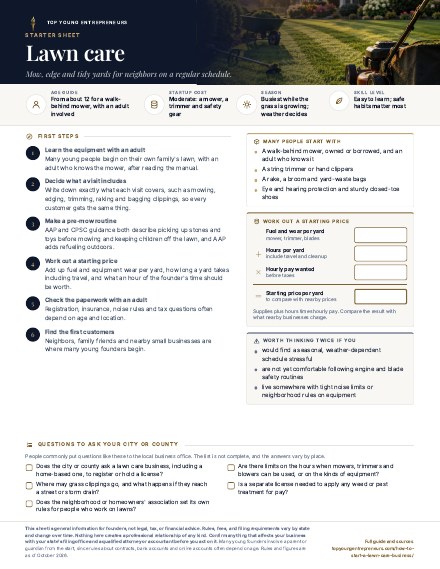
Lawn care: the one-page starter sheet
The first steps, a starter kit, a simple price worksheet and the questions worth asking locally, on one easy-to-print page.
Keep reading
- LLC vs. sole proprietorship How the two structures compare, described without telling you which to pick.
- The LLC formation checklist A map of the typical stages if a business grows into a company.
- How to get an EIN What the IRS's free business number is, who applies for one and the steps, from the IRS's own pages.
- How to start a business in Nevada The LLC steps, state fees, forms and local licenses in one state, with a printable checklist.
- The best states to start a business in 2026 A sourced comparison of state taxes and filing fees.
- Founders we have profiled Real people who built companies young, independently verified.
- How Top Young Entrepreneurs works Our editorial standards and how we source facts.
This article is general information for founders, not legal, tax, or financial advice. Rules, fees, and filing requirements vary by state and change over time. Nothing here creates a professional relationship of any kind. Confirm anything that affects your business with your state's filing office and a qualified attorney or accountant before you act on it.
Many young founders involve a parent or guardian from the start, since rules about contracts, bank accounts and online accounts often depend on age.
- American Academy of Pediatrics: Lawn mower safety: age guidance for walk-behind and riding mowers, gear and safe habits (page updated April 2025)
- U.S. Consumer Product Safety Commission: Mowing safety: clearing the lawn, keeping children away and other mowing basics
- 29 CFR 570.33: Occupations prohibited to minors 14 and 15 years of age: federal child labor rule for employees that names lawn mowers, trimmers and edgers
- U.S. Department of Labor eLaws: Youth under 14: what the federal rules say about yard work for a neighbor
- U.S. EPA: Federal certification standards for pesticide applicators: who must be certified to apply restricted use pesticides
- Nevada Revised Statutes chapter 555: pest control licensing: an example of a state that licenses pest control done for hire
- SBA: Apply for licenses and permits: why many small and home-based businesses still register locally
- City of San Rafael: Leaf blowers ordinance: an example of a city that limits leaf blowers and their hours
- Truckee Meadows storm water best management practices handbook (2007): northern Nevada guidance on keeping clippings out of storm drains
- Michigan Department of Insurance and Financial Services: Home-based business insurance: why a homeowners policy may not cover business activity
Last verified: October 1, 2026. Rules, fees and age limits change, so confirm current details with the source before acting on them. This article is educational, not legal, tax or financial advice.