
The short answer
A pressure washing business cleans driveways, patios, fences and siding with a high-pressure water sprayer, usually at the customer's property. Many people start with one machine, hoses and a few nozzles. The questions most worth checking early are where the wash water goes, the injury risks from the spray, and any local registration or insurance, because rules on runoff vary by place.
- Age guide From about 16, with an adult who knows the equipment
- Startup cost Moderate: a pressure washer and accessories
- Season Mostly warm months; weather decides
- Skill level Learnable; technique and safety matter
Free one-page starter sheet (PDF)
This article is general information for founders, not legal, tax, or financial advice. Rules, fees, and filing requirements vary by state and change over time. Nothing here creates a professional relationship of any kind. Confirm anything that affects your business with your state's filing office and a qualified attorney or accountant before you act on it.
Many young founders involve a parent or guardian from the start, since rules about contracts, bank accounts and online accounts often depend on age.
What is a pressure washing business?
A pressure washing business, also called power washing, cleans hard outdoor surfaces by spraying them with a high-pressure jet of water. Typical jobs include driveways, walkways, patios, fences and the outside of houses, and typical customers are homeowners, small shops and property managers. The startup cost is mostly one machine and its accessories, which is why the idea appears on lists of low-cost businesses, but it is also the idea on this site where equipment safety and wash-water rules need the most attention.
How do you start a pressure washing business?
The order below is a typical flow, not a rule. Some founders price before they practice, and some skip steps until the first customer asks.
-
Learn the machine with someone experienced
A pressure washer's spray can injure people and damage surfaces. Many people practice first on their own family's driveway or fence, with an adult who knows the equipment, reading the manual and trying a wide spray before a narrow one.
-
Decide which surfaces to offer
Flat concrete, such as driveways and walkways, is where many founders begin. Roofs, second stories and anything that needs a ladder are commonly left until later, or to experienced professionals.
-
Plan where the water will go
Wash water can carry soil, oil and cleaning products. Cities and states set rules on whether it may reach a storm drain, so many founders find out where the drains are, what the property owner allows and what the local utility says before the first job.
-
Work out a starting price
Many founders price from the size of the surface, the time it takes, and the cost of water, fuel and cleaner. The worksheet below turns those into a starting price to compare with nearby businesses.
-
Check the paperwork with an adult
Registration, insurance, runoff and tax questions often depend on age and location. A parent or guardian, the city or county business office and an accountant can say what applies.
-
Find the first customers
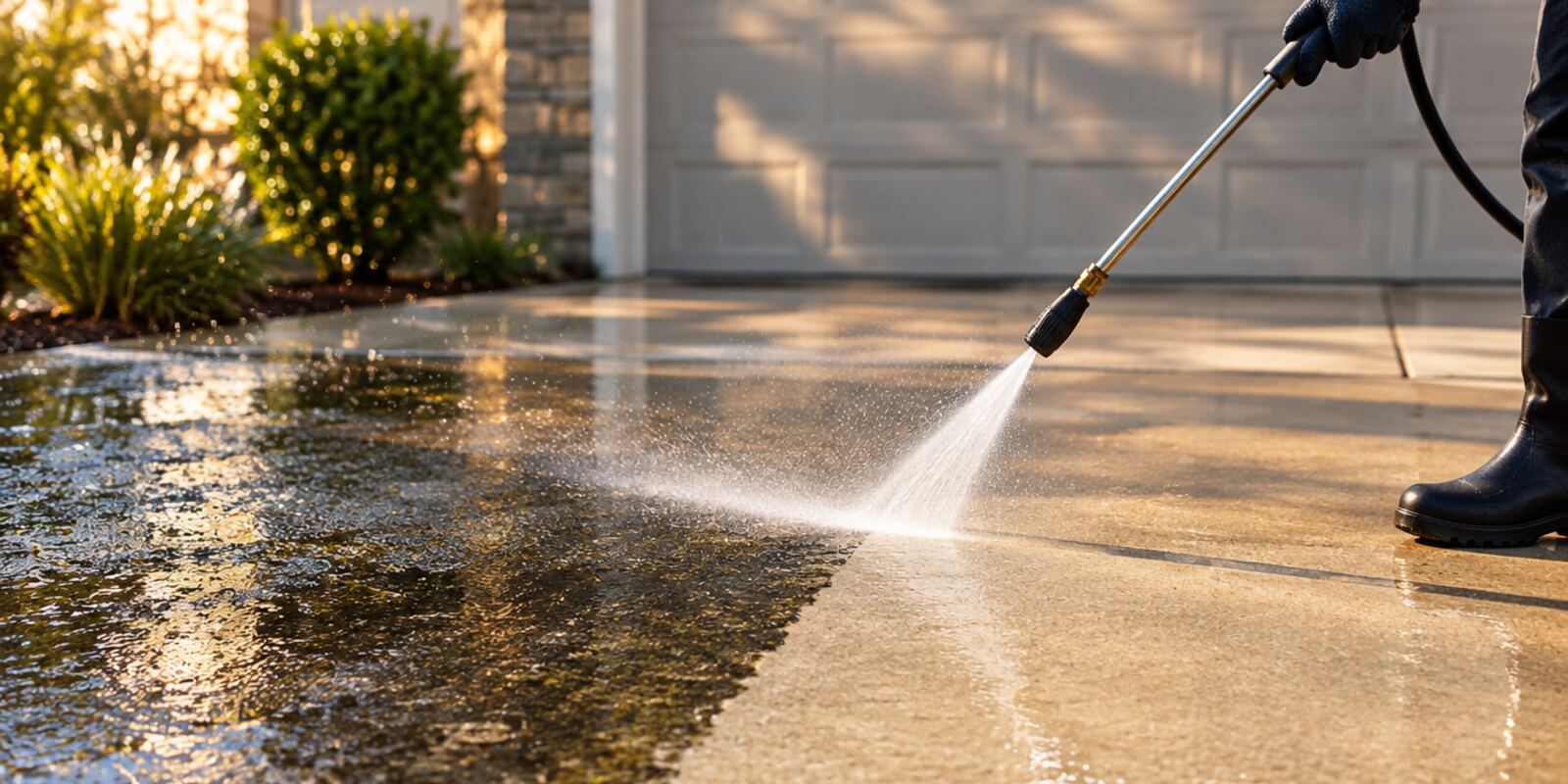
Neighbors, family friends, small shops and property managers are where many founders begin. A before and after photo of one clean stripe beside a dirty driveway shows the work quickly.
What do you need to start a pressure washing business?
Most young founders begin with a short list and add equipment only once customers are asking for more.
Many people start with
- A pressure washer with a spray wand and a few nozzles
- Hoses, and an outdoor water source the customer allows
- Eye protection, gloves and sturdy closed-toe shoes
- A broom and a way to do dry cleanup first
Often added later
- A surface cleaner attachment for large flat areas
- A wash mat or other way to capture and remove wash water
- A trailer or van to carry the equipment
- Business insurance and simple branding
Is pressure washing a good fit for you?
Often a good fit if you
- like outdoor work and clear before and after results
- can name a few neighbors or shops with driveways, patios or fences
- have an adult who can help with equipment, storage and transport
Worth thinking twice if you
- are not yet comfortable with equipment that can cause injury
- live somewhere that restricts wash-water runoff or outdoor water use
- would find a seasonal, weather-dependent schedule stressful
Where does the wash water go?
This is the question that separates pressure washing from most other starter businesses. Water running off a driveway can carry soil, oil, grease, cleaning products and debris, and the rules about where it may go sit in three layers.
- Federal law. The Clean Water Act generally makes it unlawful to discharge pollutants without authorization, and the EPA’s stormwater rules define an “illicit discharge” as any discharge to a municipal storm sewer that is not composed entirely of storm water, with limited exceptions.
- State agencies. State environmental agencies publish guidance for mobile cleaners. Ohio’s EPA, for example, calls power-washing wastewater industrial wastewater and says it cannot be discharged directly into storm drains. Indiana’s environmental agency lists options such as collecting the water for disposal or getting a sewer utility’s approval to discharge to a sanitary sewer, and notes that some communities have their own ordinances. Michigan’s says the rules depend on where the water goes.
- Cities and utilities. The local storm-sewer owner and the sewer utility set the day-to-day rules and enforce them. The City of San Diego, for example, states that it is illegal to discharge polluted water from mobile business activities, including pressure washing, into its storm sewer system, and advises locating and covering storm drains before starting.
Storm drains usually carry water to local waterways without treatment. In Nevada, Reno’s environmental guidance for businesses says most outside drains are storm drains that feed directly to the Truckee River or other water bodies, and the Las Vegas Valley stormwater program says stormwater travels untreated to Lake Mead. Northern Nevada’s Truckee Meadows storm water handbook (published in 2007) describes a general approach for mobile surface cleaning: dry cleanup before washing down, washing without soaps or solvents, keeping polluted water out of storm drains, and disposing of wastewater to the sanitary sewer with the local authority’s approval. Because local rules and handbooks change, the city or county and the local sewer utility are the places to confirm what applies.
What are the safety risks?
The sources reviewed for this guide do not set one legal age for pressure washing. The “16+” age guide on this site reflects the equipment: it is a general starting point, with an adult who knows the machine involved, and not a legal rule. Three kinds of risk come up most often.
- The spray. The CDC says the strong spray from a pressure washer can cause serious wounds that might first appear minor, and that delaying treatment raises the risk of infection, disability or amputation. It also notes that the spray can throw objects that injure people close by.
- Electricity and engines. The CDC advises testing the ground fault circuit interrupter before using a pressure washer, keeping a power cord connection out of standing water, and notes that small gasoline engines can cause carbon monoxide poisoning.
- Heights. OSHA describes falls from portable ladders as one of the leading causes of occupational fatalities and injuries, and its ladder guidance includes looking for overhead power lines and keeping three points of contact when climbing. For employees aged 14 and 15, federal child labor rules generally bar work that requires ladders or scaffolds and work operating power-driven machinery, which is one reason ground-level surfaces are where many young founders start.
How do pressure washing businesses work out a price?
Pricing is arithmetic more than a guess. A common approach is to add the cost of water, fuel and cleaner for one job to the time the job takes, including set-up, rinsing and cleanup, multiplied by the hourly pay the founder wants, then compare the result with what nearby businesses charge. Many founders adjust after their first handful of jobs, once they know how long a driveway really takes. Prices vary a great deal by place, so this guide gives no figures.
What rules might apply to a pressure washing business?
The details depend on the city, county and state, which is why a quick call to the local business office and the local utility is a common first step.
- Wash water. Covered above. Many places treat unauthorized discharges to storm drains as violations, and the party that owns the storm sewer or the sewer utility generally decides what is allowed.
- Registration and zoning. The SBA says local governments determine registration, licensing and permitting requirements, and that zoning rules can apply even to home-based businesses.
- Insurance. Work at a customer’s property can mean damage to siding, windows or plants, or injury to a bystander. Insurance regulators warn that a homeowners or renters policy may not cover a home-based business, and an insurance agent can explain what policies exist for this kind of work.
- Age. Rules about contracts, bank accounts and payment apps often depend on age, which is one reason many young founders involve a parent or guardian from the start. The Business Ideas guide covers that in more detail.
Questions to ask your city or county
People commonly put questions like these to the local business office. The list is not complete, and the answers vary by place.
- Does the city or county ask pressure washing businesses, including home-based ones, to register or hold a license?
- Where may wash water go, and when does it count as a prohibited discharge to a storm drain or street?
- Can wash water be sent to a sanitary sewer, and who approves that?
- Are there extra rules for cleaning products, or for washing near streams, ponds or storm drains?
- Does the neighborhood or homeowners' association set its own rules on outdoor washing?
What can go wrong?
The honest answer starts with the equipment. A narrow spray held close can gouge wood, strip paint and force water behind siding or into windows, and a slip on a wet surface or a fall from a ladder is a real risk. Wash-water rules can also catch beginners off guard, because water that looks harmless running down a driveway may still count as a discharge to a storm drain. The work is seasonal and weather-dependent, and underpricing is common because set-up, rinsing and travel time are easy to forget. A walk around the property first, a written description of what the job includes, an adult who knows the equipment, and a clear plan for the water matter more than a bigger machine.
Frequently asked questions
How do you start a pressure washing business?
Many people start by practicing on a family driveway with an adult who knows the equipment, deciding which surfaces to offer, finding out where the wash water will go, working out a price from surface size and time, and asking neighbors. Registration, insurance and runoff rules vary by city, so many founders check them early.
How do you price a pressure washing job?
A common approach is to add the cost of water, fuel and cleaner for one job to the time the job takes, including set-up and cleanup, multiplied by the hourly pay the founder wants, then compare the result with what nearby businesses charge. Many founders adjust after their first few jobs. Prices vary by place, so this guide does not give figures.
Do you need a license to pressure wash for money?
It varies by city, county and state. The SBA says local governments set registration, licensing and permitting rules, and that zoning can apply even to home-based businesses. Separately, many places regulate where wash water may go, so founders often ask the city or county both questions before the first job.
Where does pressure washing wastewater go?
Federal law generally makes it unlawful to discharge pollutants without authorization, and state and city guidance generally says wash water cannot go to a storm drain. Options described in guidance include collecting it for disposal or getting a sewer utility's approval to use a sanitary sewer. Rules vary by place, so local authorities have the final say.
More business ideas to look at
Mobile car wash
Wash cars at the customer's home or workplace.
Mobile car detailing
Give cars a deeper clean, inside and out, at the customer's location.
Lawn care
Mow, edge and tidy yards for neighbors on a regular schedule.
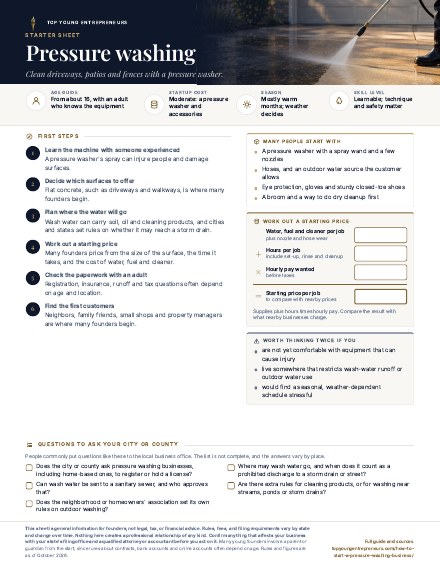
Free download
Pressure washing: the one-page starter sheet
The first steps, a starter kit, a simple price worksheet and the questions worth asking locally, on one easy-to-print page.
Keep reading
- LLC vs. sole proprietorship How the two structures compare, described without telling you which to pick.
- The LLC formation checklist A map of the typical stages if a business grows into a company.
- How to get an EIN What the IRS's free business number is, who applies for one and the steps, from the IRS's own pages.
- How to start a business in Nevada The LLC steps, state fees, forms and local licenses in one state, with a printable checklist.
- The best states to start a business in 2026 A sourced comparison of state taxes and filing fees.
- Founders we have profiled Real people who built companies young, independently verified.
- How Top Young Entrepreneurs works Our editorial standards and how we source facts.
This article is general information for founders, not legal, tax, or financial advice. Rules, fees, and filing requirements vary by state and change over time. Nothing here creates a professional relationship of any kind. Confirm anything that affects your business with your state's filing office and a qualified attorney or accountant before you act on it.
Many young founders involve a parent or guardian from the start, since rules about contracts, bank accounts and online accounts often depend on age.
- 33 U.S.C. 1311: Clean Water Act section 301(a): the federal baseline on discharging pollutants
- 40 CFR 122.26: Stormwater discharges: the federal definition of an illicit discharge to a storm sewer
- Ohio EPA: Power washing wastewater: state guidance for businesses that pressure wash (guidance, not law)
- Indiana Department of Environmental Management: Power washing fact sheet: disposal options for power-washing wastewater
- City of San Diego: Mobile business best management practices: an example of a city rule that names pressure washing
- Truckee Meadows storm water best management practices handbook (2007): northern Nevada guidance on mobile surface cleaning
- City of Reno: Environmental best practices for businesses: where Reno's storm drains lead
- Las Vegas Valley Stormwater Quality Management Committee: where Las Vegas Valley storm drains lead
- CDC: Pressure washer safety: spray injuries, flying objects, electric shock and carbon monoxide (page last reviewed August 2026)
- OSHA: Portable ladder safety QuickCard: falls from ladders and working near power lines
- 29 CFR 570.33: Occupations prohibited to minors 14 and 15 years of age: federal child labor rule for employees that names ladders and power-driven machinery
- SBA: Apply for licenses and permits: why many small and home-based businesses still register locally
Last verified: October 1, 2026. Rules, fees and age limits change, so confirm current details with the source before acting on them. This article is educational, not legal, tax or financial advice.