
The short answer
A mobile car detailing business gives vehicles a deeper clean, inside and out, at the customer's home or workplace, usually by hand. Detailing goes beyond a basic wash to cover interiors, glass, wheels and paint protection such as wax or sealant. Many people begin with family cars and a few basic supplies. Cities set rules on wash water, and some, such as Las Vegas, license mobile detailers.
- Age guide From about 15, with a parent or guardian involved
- Startup cost Moderate: supplies plus a vacuum and care products
- Time Longer jobs than a wash, so fewer fit in a day
- Skill level Learnable; care with products and surfaces matters
Free one-page starter sheet (PDF)
This article is general information for founders, not legal, tax, or financial advice. Rules, fees, and filing requirements vary by state and change over time. Nothing here creates a professional relationship of any kind. Confirm anything that affects your business with your state's filing office and a qualified attorney or accountant before you act on it.
Many young founders involve a parent or guardian from the start, since rules about contracts, bank accounts and online accounts often depend on age.
What is a mobile car detailing business?
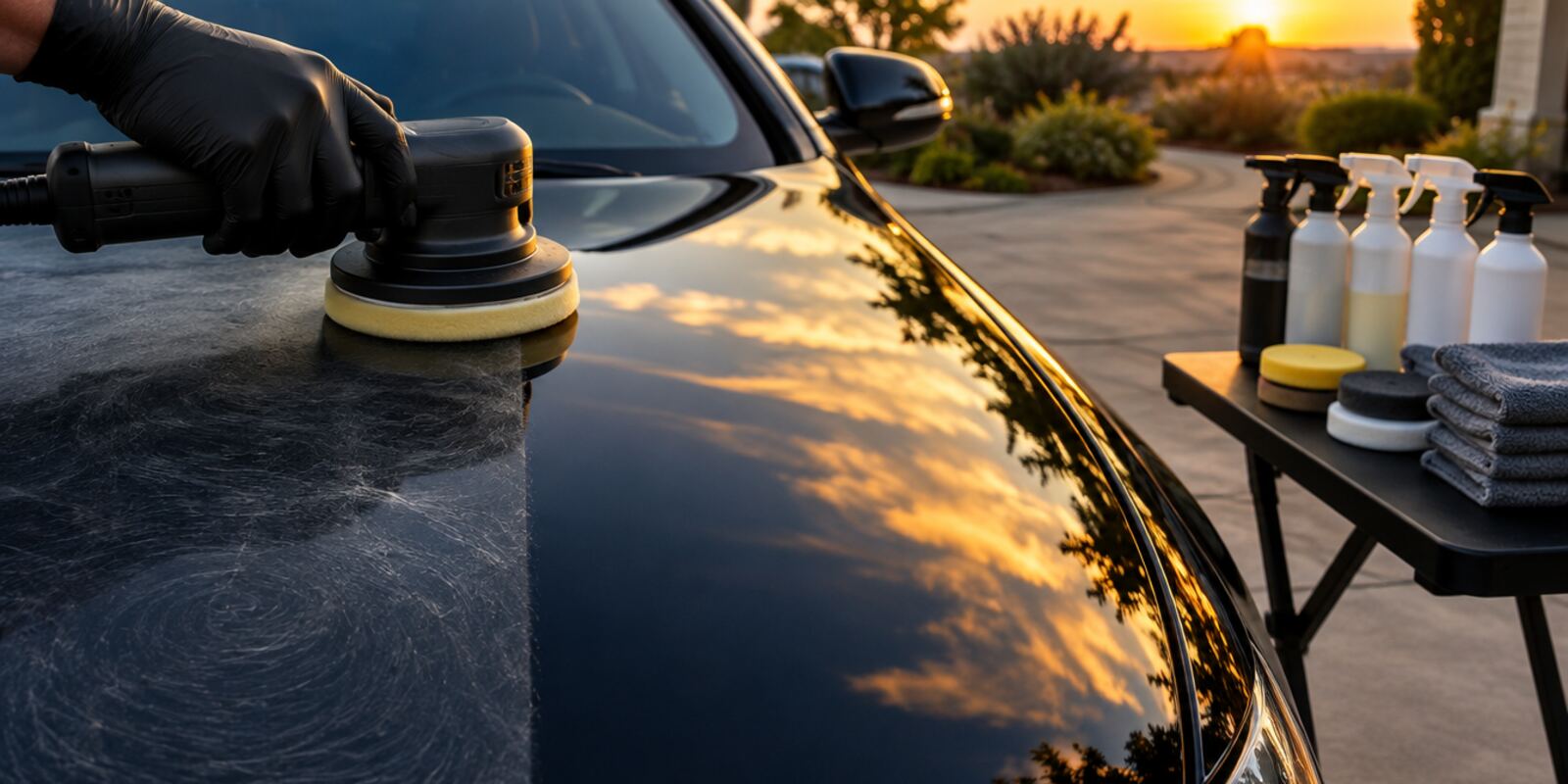
A mobile car detailing business brings a deeper clean to the car. Instead of customers driving to a shop, the founder travels to a driveway, an apartment lot or a workplace and cleans the vehicle inside and out, usually by hand. Detailing typically goes beyond a basic wash to include vacuuming, interior surfaces, glass, wheels and paint protection such as wax or sealant, which is why one job usually takes longer than a wash. The U.S. Department of Labor’s O*NET database lists “car detailer” among the job titles for vehicle cleaners and describes tasks such as applying polishes, reconditioners and waxes to vehicles, although it describes jobs for employees, not owner-operators. A simpler exterior wash has its own guide.
How do you start a car detailing business?
The order below is a typical flow, not a rule. Some founders price before they practice, and some skip steps until the first customer asks.
-
Learn the work on family cars first
Many people start with their own family's cars to learn the order of the work, which products suit which surfaces and how long a full inside and outside clean really takes.
-
Decide what each service includes
Write down exactly what a basic clean, a fuller inside and outside clean and any add-ons such as wax cover, so every customer knows what the price buys.
-
Plan the water
Rinsing, wheels and carpet cleaning all leave wastewater. Cities set rules on where it may go, so many founders find out what applies, and what the property owner allows, before the first job.
-
Work out a starting price
Add up the supplies used on one vehicle, how long one detail takes including setup and travel, and what an hour of the founder's time should be worth. The result is a starting point that can change after the first few jobs.
-
Check the paperwork with an adult
Registration, insurance and tax questions often depend on age and location. A parent or guardian, the city or county business office and an accountant can say what applies.
-
Find the first customers
Neighbors, family friends and local shops are where many young founders begin. A clear, friendly message with a few before and after photos, shared with the owner's permission, usually does the job.
What do you need to start a mobile detailing business?
Most young founders begin with a short list and add equipment only once customers are asking for more.
Many people start with
- Microfiber towels, wash mitts and a car-safe soap
- Interior cleaner, glass cleaner and soft brushes
- A vacuum, such as a wet and dry shop vacuum
- A phone for booking and for before and after photos
Often added later
- A machine polisher and pads, once the technique has been practiced
- An extractor for carpets and seats
- Wax, sealant and other paint protection products
- Business insurance and simple branding
Is mobile car detailing a good fit for you?
Often a good fit if you
- enjoy careful, detailed work and notice small things
- can name a few neighbors or family friends as possible first customers
- can set aside a longer block of time for each vehicle
Worth thinking twice if you
- would find repetitive, physical cleaning tiring
- have no adult who can help with transport, supplies and the paperwork
- would be uncomfortable handling the inside of other people's cars
How is car detailing different from a car wash?
The split below is typical rather than official, and companies draw the line in different places. It matters for the price, the schedule and the risks.
| What differs | Basic wash | Detailing |
|---|---|---|
| Main aim | Remove dirt from the outside | Clean, restore and add protection to the inside and the outside |
| Typical tasks | Rinse, wash and dry, sometimes a quick interior tidy | Vacuuming, interior surfaces, glass, wheels, polish and wax or sealant |
| Time on each vehicle | Shorter | Longer, so fewer jobs fit in a day |
| What takes practice | Clean towels and consistent technique | Matching products to surfaces and learning machine polishing |
| Usual risks | Wash water, dirt dragged across paint | Damaged interiors or paint, chemicals, customers’ belongings |
Where does the water go in mobile detailing?
Rinsing a car, cleaning wheels and extracting dirt from carpets all leave wastewater that carries soap and dirt. Storm drains usually lead to local waterways, not to a treatment plant, which is why cities restrict what goes into them. The EPA’s fact sheet on vehicle washing says outdoor car washing can cause detergent-rich water to flow into storm drains, and the City of San Diego states that it is illegal to discharge polluted water from mobile business activities, including mobile detailing, into its storm sewer system.
In the Las Vegas Valley, the regional stormwater program’s guidance (a page that appears to date from about 2021) has a separate entry for mobile auto detailing with soap, described as infrequent, light cleaning that rarely happens at the same location and uses a minimum of water. For that case it says minimal runoff may remain on paved surfaces to evaporate, says that if there is too little water to reach the storm drain the drain should be sealed and the water pumped to the sanitary sewer, and says directing minimal flows to landscaped areas, after discussing it with the property owner, is acceptable, while adding that repetitive use of the same area or excessive volume “may be illegal.” That entry is limited by its own description. The same page is stricter for exterior washing of fleet vehicles with soap, which it says calls for wash pads that capture the wastewater and discharge it to the sanitary sewer, and for engine and degreasing washes, which it says need treatment before the sanitary sewer.
Northern Nevada’s Truckee Meadows handbook (published in 2007) lists auto detailing within mobile vehicle washing and says not to discharge wash water to the storm drain system. Handbooks age and local rules change, so the city or county and the local sewer utility are the places to confirm what applies.
How do mobile detailers work out a price?
Pricing is arithmetic more than a guess. A common approach is to add the cost of supplies for one vehicle to the time one detail takes, including setup and travel, multiplied by the hourly pay the founder wants, then compare the result with what nearby businesses charge. Many founders adjust after their first handful of jobs, once they know how long a vehicle really takes. Prices vary a great deal by place and by service, so this guide gives no figures.
What rules might apply to a mobile car detailing business?
The details depend on the city, county and state, which is why a quick call to the local business office is a common first step.
- Water. Covered above. Many places treat unauthorized discharges to storm drains as violations. In Southern Nevada, the Southern Nevada Water Authority also publishes a water-use rule: it says mobile car washing is allowed if the company uses a high-pressure, low-volume sprayer and less than 10 gallons of water per vehicle (as of October 2026).
- City licenses. Some cities license mobile detailers specifically. The Las Vegas Municipal Code has a chapter for “mobile car wash/auto detail” businesses (Chapter 6.54) that calls for a city license, a separate license for each additional vehicle and written permission from the property owner or tenant to work at a location, and it bars washing a vehicle on a public street, among other conditions (code current through January 2026). Other cities differ.
- Registration and zoning. The SBA says local governments determine registration, licensing and permitting requirements, and that zoning rules can apply even to home-based businesses.
- Insurance. Customers’ cars are someone else’s property. The California Department of Insurance lists “care, custody, and control” and pollution among the major exclusions in a commercial general liability policy, which is one reason policies are worth reading closely with an agent. Triple-I, an insurance-industry group, says that if a vehicle is used primarily in business there is likely no coverage under a personal auto policy, which can matter if a family vehicle carries supplies. An insurance agent can explain what policies exist for this kind of work.
- Age. Rules about contracts, bank accounts and payment apps often depend on age, which is one reason many young founders involve a parent or guardian from the start. The Business Ideas guide covers that in more detail.
- Federal child labor rules. These are a separate question and concern employees. The U.S. Department of Labor’s rule for 14- and 15-year-old employees lists “car cleaning, washing and polishing by hand” among permitted work, excludes work with pits, racks or lifting apparatus, and lists the operation of motor vehicles among prohibited work; operating power-driven machinery is also prohibited, with named exceptions such as vacuum cleaners and floor waxers. Whether a young person counts as self-employed or as an employee depends on the facts, and state rules can be stricter, so families who are unsure often ask their state labor agency.
Questions to ask your city or county
People commonly put questions like these to the local business office. The list is not complete, and the answers vary by place.
- Does the city or county ask a mobile detailing business to hold a license, and is a separate license needed for each vehicle?
- Where may rinse water, soapy water and water from carpet cleaning go, and when does it count as a prohibited discharge to a storm drain?
- Do local water rules limit how much water a mobile service may use on each vehicle?
- Is written permission from the property owner or tenant needed to work at a customer's address, and may any of the work happen on a public street?
- Which kinds of cleaning, such as engine bays or degreasing, are treated more strictly than a basic exterior wash?
What can go wrong?
The honest answer is that detailing is slow, physical and easy to get wrong. A harsh cleaner on the wrong surface, an interior left soaked, polish that goes through the paint or a missing belonging can cost more than the job paid, and some stains, scratches and odors will not come out however long the work takes. Practicing on family cars, testing a product on a hidden spot, photographing the vehicle and any belongings before starting, saying plainly what a service can and cannot fix, and leaving jobs that involve mold, needles or pests to people with the training and equipment matter more than any machine. A plan for the wash water and a parent or guardian who understands the paperwork matter as well.
Frequently asked questions
How do you start a car detailing business?
Most people start by practicing on family cars, deciding what each service includes, planning where the water goes, working out a price and finding a few first customers. Detailing takes longer per vehicle than a basic wash, so many founders also work out how many jobs fit in a day. Local rules on wash water, licenses and insurance vary, so many founders check them early with a parent or guardian.
What is the difference between a car wash and car detailing?
A wash cleans the outside of a vehicle. Detailing is a deeper clean that usually adds the interior, such as vacuuming, surfaces and glass, plus wheels and paint protection such as wax or sealant. The U.S. Department of Labor's O*NET database lists applying polishes, reconditioners and waxes among the tasks of vehicle cleaners, and companies draw the line between the two services in different places.
What equipment do you need to start a mobile detailing business?
Many people start with microfiber towels, wash mitts, car-safe soap, interior and glass cleaners, soft brushes, a vacuum and a way to get water on site. A machine polisher, a carpet and seat extractor or paint protection products are often added later, once the founder has practiced and customers are asking for more.
Where does the water go in mobile car detailing?
Local rules decide. Las Vegas Valley stormwater guidance from about 2021 says minimal runoff from light mobile detailing may remain on paved surfaces to evaporate, but it treats exterior fleet washing and engine washing more strictly. Reno-area guidance says not to discharge wash water to the storm drain system. Rules differ by place, so the city or county can say what applies.
More business ideas to look at
Mobile car wash
Wash cars at the customer's home or workplace.
Mobile mechanic
Repair and maintain vehicles at the customer's location.
Pressure washing
Clean driveways, patios and fences with a pressure washer.
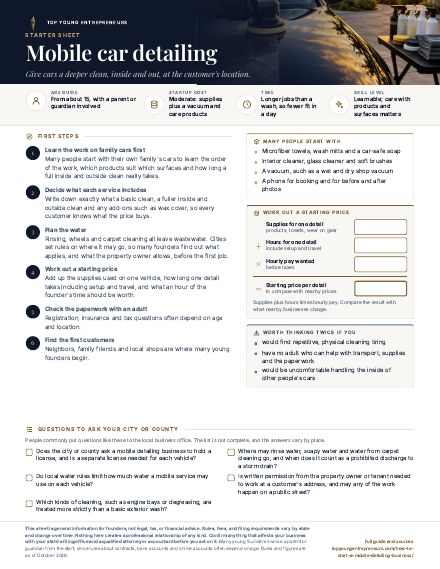
Free download
Mobile car detailing: the one-page starter sheet
The first steps, a starter kit, a simple price worksheet and the questions worth asking locally, on one easy-to-print page.
Keep reading
- LLC vs. sole proprietorship How the two structures compare, described without telling you which to pick.
- The LLC formation checklist A map of the typical stages if a business grows into a company.
- How to get an EIN What the IRS's free business number is, who applies for one and the steps, from the IRS's own pages.
- How to start a business in Nevada The LLC steps, state fees, forms and local licenses in one state, with a printable checklist.
- The best states to start a business in 2026 A sourced comparison of state taxes and filing fees.
- Founders we have profiled Real people who built companies young, independently verified.
- How Top Young Entrepreneurs works Our editorial standards and how we source facts.
This article is general information for founders, not legal, tax, or financial advice. Rules, fees, and filing requirements vary by state and change over time. Nothing here creates a professional relationship of any kind. Confirm anything that affects your business with your state's filing office and a qualified attorney or accountant before you act on it.
Many young founders involve a parent or guardian from the start, since rules about contracts, bank accounts and online accounts often depend on age.
- EPA: Vehicle maintenance and washing, stormwater best management practices (2023): why car wash water and storm drains are a concern
- LVStormwater: Transportation washing best management practices: Las Vegas Valley guidance with a separate entry for mobile auto detailing (a page that dates from about 2021)
- Southern Nevada Water Authority: Understand laws and ordinances: the Southern Nevada water rule for mobile car washing
- Truckee Meadows storm water best management practices handbook (2007): northern Nevada guidance on mobile vehicle washing, which names auto detailing
- City of San Diego: Mobile business best management practices: an example of a city rule that names mobile detailing
- Las Vegas Municipal Code, Chapter 6.54: Mobile car wash/auto detail businesses: an example of one city's license rules (code current through January 2026)
- O*NET OnLine: Cleaners of vehicles and equipment: U.S. Department of Labor description of vehicle cleaner tasks and job titles, including car detailer
- California Department of Insurance: Commercial insurance guide: common exclusions in general liability policies, including care, custody and control
- Triple-I: Business vehicle insurance: personal auto policies and business use of a vehicle (an insurance-industry source)
- 29 CFR 570.34: Work 14 and 15 year olds may do: federal child labor rule for employees that lists car washing and polishing by hand
- SBA: Apply for licenses and permits: why many small and mobile businesses still register locally
Last verified: October 1, 2026. Rules, fees and age limits change, so confirm current details with the source before acting on them. This article is educational, not legal, tax or financial advice.