

Local service
Mobile car wash
Wash cars at the customer's home or workplace.
Business Ideas
Ten ways to start small, with the first steps, a starter kit and the local rules to check for each.
The short answer
Many young people start with a low-cost, service-based business that needs little equipment, such as lawn care, pet sitting, mobile car washing or tutoring. Others start with a skill, like helping local shops with social media or learning automation tools. This page compares ten ideas: what each involves, what people typically start with, and which local rules to check first.
This article is general information for founders, not legal, tax, or financial advice. Rules, fees, and filing requirements vary by state and change over time. Nothing here creates a professional relationship of any kind. Confirm anything that affects your business with your state's filing office and a qualified attorney or accountant before you act on it.
Many young founders involve a parent or guardian from the start, since rules about contracts, bank accounts and online accounts often depend on age.
Each idea has its own guide. This table is the quick comparison, and the cards below it are grouped by the kind of work involved.
| Idea | Age guide | Startup cost | Where it happens | What people typically bring |
|---|---|---|---|---|
| Mobile car wash | 14+ | Low | At the customer's home or workplace | Buckets, wash mitts, towels and a way to get water |
| Mobile car detailing | 15+ | Moderate | At the customer's home or workplace | Towels, interior and exterior products, a vacuum and a way to get water |
| Mobile mechanic | 18+ | Higher | At the customer's home or workplace, usually from a van | Tools, a work vehicle, parts and training |
| Lawn care | 12+ | Moderate | Outdoors at customers' homes | A mower, a trimmer, a rake and safety gear |
| Pressure washing | 16+ | Moderate | Outdoors at customers' homes and shops | A pressure washer, hoses, nozzles and a plan for the wash water |
| Pet sitting and dog walking | 13+ | Low | Around the neighborhood or in the pet's home | Leashes, waste bags, a phone and a written plan for each pet |
| AI automation and vibe coding | 13+ | Low | On a laptop, for local businesses | A laptop, starter-level tool accounts and curiosity |
| Social media help for local shops | 16+ | Low | On a phone or laptop, for local businesses | A phone, a few apps and a client's permission |
| Tutoring | 14+ | Low | At a library, online, or at home with a parent nearby | Subject knowledge, patience and a plan for each session |
| Reselling | 13+ | Low | Online, by mail or at a local pickup | Items to sell, a phone for photos and packing supplies |
Startup cost labels are our own grouping, not price quotes: low usually means mostly things a person may already own, moderate means buying some specialist equipment such as a mower, a pressure washer or a polisher, and higher means a work vehicle, a full set of tools and insurance. Age guides are a general starting point with a parent or guardian involved, not a legal rule. Both vary by place.
Work you do in person, close to home. Customers usually come from neighbors, family friends and repeat visits.
Wash cars at the customer's home or workplace.

Give cars a deeper clean, inside and out, at the customer's location.
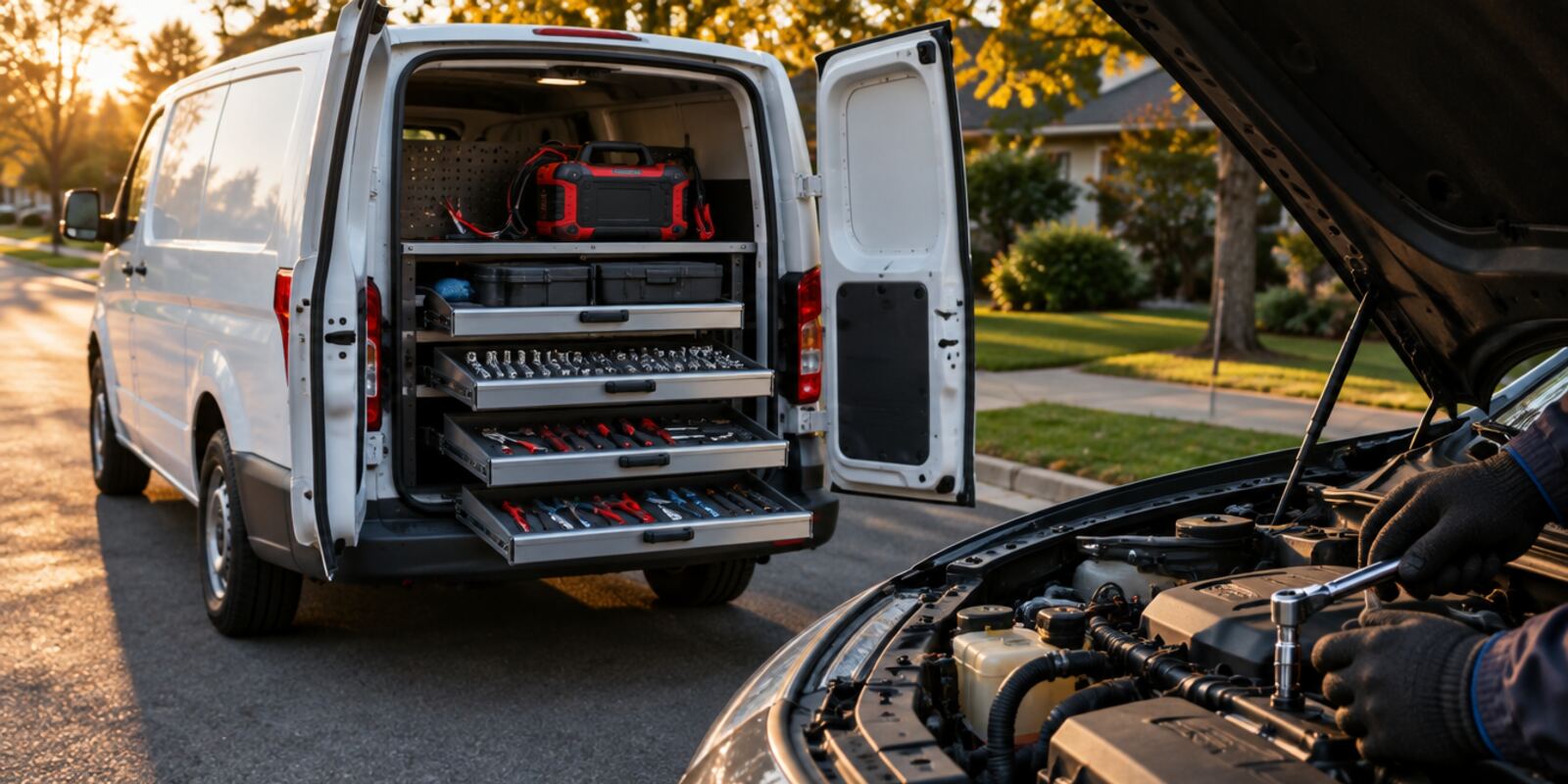
Repair and maintain vehicles at the customer's location.

Mow, edge and tidy yards for neighbors on a regular schedule.

Clean driveways, patios and fences with a pressure washer.

Walk dogs and look after pets while their owners are out.
Skills you can learn online and offer to shops, trades and small teams that never had time for them.
Turn things you find, or things you know, into a small business, with very little to spend up front.
There is no single right answer, but these are the questions young founders commonly start with.
Some ideas start with things many households own, like a phone, a laptop or a mower. Others involve a vehicle or specialist tools, which changes the cost and the age guide.
Weekend jobs and after-school work suit different ideas. Seasonal work, like lawn care, follows the weather, while tutoring follows the school calendar.
The ideas split roughly into hands-on work outside, work for local businesses on a computer, and buying, selling or teaching. Pick the kind of day that sounds bearable on a bad week.
Neighbors, family friends and local shops are where many young founders begin. If a first customer is easy to name, the idea is usually easier to test.
In general, a contract with a minor is voidable, meaning the minor may be able to cancel it while the other side generally cannot, and the details vary by state. That is why businesses and banks often ask a parent or another adult to co-sign. The age of majority is usually 18, including in Nevada, but a few states set it higher, so the rule in your state is worth checking.
The IRS says people usually must pay self-employment tax if they had net earnings from self-employment of $400 or more, and that these rules apply no matter how old you are. It also says income from goods you sell or services you provide is reportable whether or not a payment app sends a Form 1099-K. Figures are as of October 2026, so confirm current ones. IRS: Self-employment tax.
The SBA says the licenses and permits a business needs depend on its activities and location, and that local governments determine registration, licensing and permitting requirements. Zoning rules can apply even to home-based businesses. As one example, the Las Vegas Municipal Code has a chapter for mobile car wash and auto detail businesses that calls for a city license. Other cities differ. How the two common business setups compare.
Insurance regulators warn that a homeowners or renters policy may not cover a home-based business, and Michigan's insurance department says most home insurance policies exclude business activities conducted on a regular basis in the home. Triple-I, an insurance education group, adds that a personal auto policy is designed for personal rather than commercial use, which can matter for ideas that involve a vehicle. An insurance agent can explain what policies exist.
Banks and credit unions commonly involve a parent or other adult as co-owner or custodian for customers under 18, because account agreements follow state law. Payment apps set their own age rules: as of October 2026, PayPal says an account holder must be at least 18 or the age of majority in their state, while Venmo and Cash App offer teen accounts that a parent or guardian is linked to or sponsors, and Venmo says personal and teen accounts may not be used for business transactions with other personal accounts.
The FTC says advertising must be truthful and not deceptive, advertisers must have evidence to back up their claims, and ads cannot be unfair. Its rule on consumer reviews and testimonials, which took effect in October 2024, addresses fake or purchased reviews and buying fake social media followers. FTC: Advertising FAQs for small business.
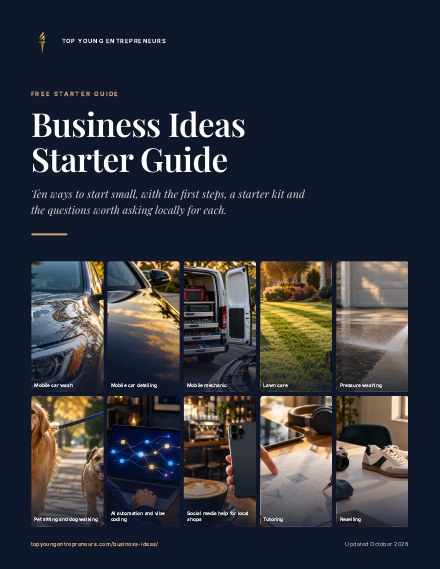
All ten ideas side by side, with the first steps, a starter kit and the questions worth asking locally for each, designed to be easy to read and easy to print.
Teens often start with low-cost services close to home, such as lawn care, pet sitting and dog walking, tutoring, or reselling things they already own, often with a parent or guardian's help. Ideas that depend on a vehicle, heavy equipment or specialist skills, such as mobile mechanic work, usually suit older or more experienced founders. The ten ideas on this page are grouped by how much equipment and experience each one tends to involve.
There is no single age. The age of majority is usually 18, including in Nevada, and a contract with a minor is generally voidable, so banks, payment apps and customers often ask for a parent or guardian. Many young founders start earlier with an adult's help, and platforms, cities and states can set their own age limits, which is why each idea guide lists the rules it found.
Many 15-year-olds start with low-cost services close to home, such as pet sitting and dog walking, lawn care, tutoring or mobile car washing, with a parent or guardian involved. The age guides on this page are editorial starting points, not legal rules. Online platforms set their own minimum ages, and several marketplaces say sellers or tutors must be 18, so each idea guide lists the ones that apply.
Service businesses that rely on time and skills rather than inventory usually cost the least to start. Lawn care, pet sitting, tutoring and social media help can often begin with things people already own, while mobile car work, mechanic work and pressure washing tend to involve more equipment. Actual costs vary by place and by how much equipment a person chooses to buy.
The IRS says people usually must pay self-employment tax if they had net earnings from self-employment of $400 or more, and that these rules apply no matter how old you are. It also says income from goods you sell or services you provide is reportable whether or not a payment app sends a Form 1099-K. These figures are as of October 2026, so confirm current ones with the IRS or a tax professional.
Not always. A sole proprietorship, where the owner and the business are legally the same, generally does not require a state formation filing, while an LLC does. Either one can still involve local licenses or permits. Which structure fits depends on the business, the state and the owner's situation, so it is worth reading both comparisons and asking a qualified attorney or accountant.
Many of these ideas begin with people already nearby: neighbors, family friends, local shops and community groups, then grow through repeat visits and referrals. Ideas aimed at businesses, such as social media help or automation, often start with one local shop or team that already knows the founder.
If a side business starts to look like a real one, these guides describe the structures, filings and costs involved.
This article is general information for founders, not legal, tax, or financial advice. Rules, fees, and filing requirements vary by state and change over time. Nothing here creates a professional relationship of any kind. Confirm anything that affects your business with your state's filing office and a qualified attorney or accountant before you act on it.
Many young founders involve a parent or guardian from the start, since rules about contracts, bank accounts and online accounts often depend on age.
Last verified: October 1, 2026. Rules, fees and age limits change, so confirm current details with the source before acting on them. This page is educational, not legal, tax or financial advice.