

The short answer
A social media management business helps local shops and groups plan, post and reply on platforms such as Instagram, TikTok, Facebook and LinkedIn. Many young people start by helping one business they already know, using a phone and a content calendar. Each platform sets its own minimum age, mostly 13 and 16 for LinkedIn, and the FTC's rules on endorsements and fake reviews apply to the content a manager helps create.
- Age guide From about 16; most platforms say 13 and LinkedIn says 16
- Startup cost Low: a phone and a few apps
- Time Regular scheduled hours each week for each client
- Skill level Writing, photos and reliability; no coding
Free one-page starter sheet (PDF)
This article is general information for founders, not legal, tax, or financial advice. Rules, fees, and filing requirements vary by state and change over time. Nothing here creates a professional relationship of any kind. Confirm anything that affects your business with your state's filing office and a qualified attorney or accountant before you act on it.
Many young founders involve a parent or guardian from the start, since rules about contracts, bank accounts and online accounts often depend on age.
What is a social media management business?
A social media management business takes day-to-day posting off a local business owner’s plate. A bakery, a barber shop, a landscaper or a youth club often has accounts but little time to keep them current, and a young person who already lives on these platforms can plan the posts, take the photos, write the captions and answer comments. It needs no equipment beyond a phone, which is why it appears on lists of low-cost businesses for young people. It also means representing someone else’s brand in public, which is why access, permission and disclosure matter more here than in most starter ideas.
How do you start a social media management business?
The order below is a typical flow, not a rule. Some founders find a client first and work out the details afterward.
-
Start with one business you already know
A family friend's shop, a neighbor's side business or a local club is where many people begin. Looking at what the account posts now, and what customers ask most often, gives a first list of ideas.
-
Decide what the help includes
Planning posts, taking or editing photos, writing captions, replying to comments and a short monthly summary are common parts. Writing down what is included, and who approves what, keeps expectations clear.
-
Get access the way each platform intends
Platforms offer roles and permissions so someone can manage an account without the owner's password. YouTube describes channel permissions as safer than sharing a password, and LinkedIn Pages are run by assigned admins.
-
Keep a simple content calendar
A shared calendar of what will post and when, with a sign-off step for the owner, is how many managers keep an account consistent and avoid surprises.
-
Work out a starting price
Add up tool costs, how many hours a month the work takes, and what an hour of the founder's time should be worth. The result is a starting point that can change after the first couple of months.
-
Check the paperwork with an adult
Client agreements, payment accounts, platform rules and tax questions often depend on age and location. A parent or guardian, the city or county business office and an accountant can say what applies.
What do you need to start a social media management business?
Most young founders begin with a short list and add equipment only once clients are asking for more.
Many people start with
- A smartphone with a good camera
- A design app and a scheduling app
- A shared content calendar; a spreadsheet works
- A one-page note of what is included and who approves posts
Often added later
- A tripod, a light or a microphone
- A simple monthly report
- A written client agreement, reviewed by a parent or guardian
- Business registration and simple branding
Is social media help a good fit for you?
Often a good fit if you
- like writing, taking photos or editing short videos
- can name a local business or club that might want help
- are comfortable following a posting schedule and a client's approval
Worth thinking twice if you
- would not enjoy replying to customer messages or complaints
- are under a platform's minimum age and have no adult to help with accounts
- expect quick follower or sales results, which no one can promise
What does a social media manager do for a small business?
The scope varies by client, which is why many managers write it down. The pieces below come up most often.
- Planning. A calendar of what will post, where and when, based on what the business sells and what customers ask.
- Creating. Photos, short videos, graphics and captions, usually approved by the owner before they go live.
- Posting and replying. Publishing on schedule and answering comments and direct messages, with agreed wording for complaints.
- Reporting. A short summary of what was posted and how people responded, so the owner can see what happened.
How old do you have to be to manage social media for a business?
Each platform sets its own minimum age for holding an account. The list below is as of October 2026, and terms change, so each platform’s own page has the current rule.
| Platform | What its published terms say |
|---|---|
| Instagram and Facebook | Meta has said it requires people to be at least 13 to sign up, and that its minimum age is higher in some countries. |
| TikTok (U.S.) | People under 13, or under 14 in Florida, may not use the main platform unless they are using the separate Under 13 Experience. |
| YouTube | Users must be at least 13, while children of all ages may use YouTube Kids (where available) if a parent or guardian enables it. |
| X | At least 13 (terms version labeled effective October 9, 2026). |
| The services are not for anyone under 16. | |
| Not allowed under 13, and ages 13 to 18 may use the service only with a parent or legal guardian’s permission. Commercial use requires a business account. |
These are rules about holding an account. Whether a platform lets a person under its minimum age help manage a client’s business account was not something the sources reviewed here settled, so that question belongs with each platform’s terms, a parent or guardian and the client. The “16+” age guide on this page is an editorial starting point that follows the strictest platform listed, not a legal rule.
How do you get access to a client’s accounts?
Platforms generally provide roles and permissions for this, so a manager does not need the owner’s password. YouTube’s help page says channel permissions let you give people access to manage a channel without needing access to your Google Account, and describes that as safer than sharing a password. LinkedIn’s instructions for creating a Page have the creator confirm they have the right to act on behalf of the company, and the creator becomes the super admin who can assign others as admins; LinkedIn’s user agreement also says members will not share their account with anyone else. Many managers also keep their own logins separate from the client’s, use two-step sign-in, and agree in writing who holds the logins when the work ends.
What are the disclosure and review rules?
The FTC’s guidance applies to marketing that people see on social media, including content a manager helps create.
- Material connections. FTC staff guidance says a “material connection” to a brand includes a personal, family or employment relationship or a financial relationship, such as the brand paying you or giving you free or discounted products. It says the disclosure should be placed with the endorsement message itself, should not be mixed into a group of hashtags or links, and is likely to be missed if it appears only on a profile page. Plain terms such as “ad,” “advertisement” and “sponsored” are described as clear, and vague ones such as “sp,” “spon” or “collab” are not. (The staff brochure is dated November 2019.)
- Trying the product. The same guidance says you cannot talk about your experience with a product you have not tried.
- Agencies and intermediaries. The FTC’s Endorsement Guides, revised in 2023, say advertising agencies, public relations firms and similar intermediaries may be liable for their roles in creating or spreading deceptive endorsements, including ones that lack necessary disclosures.
- Fake reviews and followers. The FTC’s Consumer Reviews and Testimonials Rule took effect on October 21, 2024. It addresses fake or false reviews, buying positive or negative reviews, review suppression and the misuse of fake indicators of social media influence, such as bought followers, and the FTC says agencies and similar firms are not immune from liability under it.
- Platform tools. TikTok’s branded content policy says people posting branded content have to enable the commercial content disclosure toggle, and YouTube says videos that feature sponsorships or other commercial relationships call for its paid promotion button.
How do social media managers work out a price?
Pricing is arithmetic more than a guess. A common approach is to add the monthly cost of apps and tools to the hours a month the work takes, including planning, posting, replying and reporting, multiplied by the hourly pay the founder wants, then compare the result with what nearby freelancers or agencies charge. Many founders start with one small client at a low-risk arrangement to learn how long the work really takes. This guide gives no figures because they vary widely.
What rules might apply to a social media management business?
The details depend on the platform, the state and the client, and a quick conversation with a parent or guardian and the local business office is a common first step.
- Platforms. Age limits, business-account rules and branded-content tools differ by platform, as above.
- Advertising law. The FTC says advertising must be truthful and non-deceptive, advertisers must have evidence to back up their claims, and ads cannot be unfair, and every state also has its own consumer protection laws.
- Registration and taxes. The SBA says local governments determine registration, licensing and permitting requirements. The IRS says people generally owe self-employment tax if they have net earnings of $400 or more, no matter how old they are (as of October 2026; confirm current figures with the IRS).
- Age. Rules about contracts, bank accounts and payment apps often depend on age, which is one reason many young founders involve a parent or guardian from the start. The Business Ideas guide covers that in more detail.
Questions to ask before the first client
People commonly put questions like these to the local business office, a parent or guardian, and the client. The list is not complete, and the answers vary by place and by platform.
- Does the city or county ask a marketing or social media service, including a home-based one, to register or hold a license?
- Do the platform's terms allow someone of this age to help manage a business account, and which role or permission is the right one?
- Who owns the accounts, the photos and the content, and who keeps the logins when the work ends?
- Does the business have permission to post photos of customers, employees or children?
- Will any post involve free products, discounts or a family or friend relationship that needs to be disclosed?
What can go wrong?
The honest answer is that a post is public and permanent in practice. A mistake on a client’s account, such as using music or photos without permission, showing a customer’s face or a house number, replying to a complaint in a way the owner would not have chosen, or posting a paid or gifted promotion without a clear disclosure, becomes the founder’s problem as well as the client’s. Promising followers, sales or viral posts is another common problem, because no one controls those. Written scope, an approval step for every post, access through platform roles, a record of who owns what, and a parent or guardian who understands the paperwork matter more than any app.
Frequently asked questions
How do you start a social media management business?
Many people start by helping one local business they already know, agreeing in writing what is included, getting access through each platform's roles rather than a shared password, and keeping a simple content calendar with the owner's sign-off. Platform age rules, disclosure rules and contract rules for minors vary, so many founders involve a parent or guardian.
What does a social media manager do?
A social media manager plans and publishes posts for a business, writes captions, replies to comments and messages, keeps a content calendar and reports on what happened. For a small local shop that often means one or two platforms, with the scope agreed with the owner in advance. Scope varies by client, so many managers write down what is included.
How old do you have to be to manage social media for a business?
Each platform sets its own minimum age. As of October 2026 Meta, YouTube and X say 13, TikTok says 13 or 14 in Florida, Pinterest says 13 with a parent or guardian's permission up to 18, and LinkedIn says 16. Whether a platform lets a younger person help run a business account is a question for its terms, so many young founders start at 16 or involve a parent or guardian.
Do you have to disclose paid posts on social media?
FTC guidance says a material connection to a brand, such as payment, free products, or a personal, family or employment relationship, should be disclosed clearly with the endorsement itself, not buried in hashtags or placed only on a profile page. FTC staff say plain terms like ad or sponsored are clear, and vague ones like sp or collab are not. Platforms also offer their own paid-partnership tools.
More business ideas to look at

AI automation and vibe coding
Learn to build small automations and tools for local businesses.

Tutoring
Help other students learn a subject you already know well.

Reselling
Sell used or secondhand items online or locally for more than they cost.
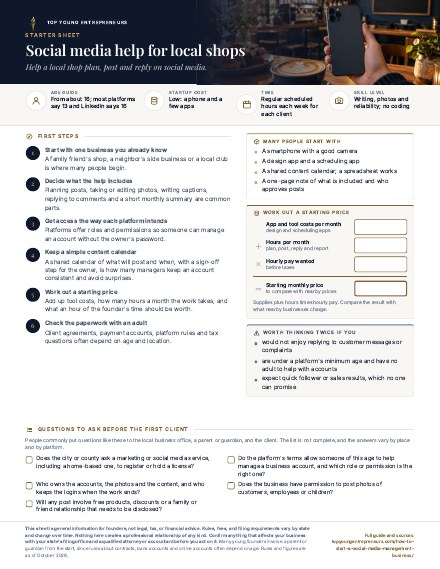
Free download
Social media help for local shops: the one-page starter sheet
The first steps, a starter kit, a simple price worksheet and the questions worth asking locally, on one easy-to-print page.
Keep reading
- LLC vs. sole proprietorship How the two structures compare, described without telling you which to pick.
- The LLC formation checklist A map of the typical stages if a business grows into a company.
- How to get an EIN What the IRS's free business number is, who applies for one and the steps, from the IRS's own pages.
- How to start a business in Nevada The LLC steps, state fees, forms and local licenses in one state, with a printable checklist.
- The best states to start a business in 2026 A sourced comparison of state taxes and filing fees.
- Founders we have profiled Real people who built companies young, independently verified.
- How Top Young Entrepreneurs works Our editorial standards and how we source facts.
This article is general information for founders, not legal, tax, or financial advice. Rules, fees, and filing requirements vary by state and change over time. Nothing here creates a professional relationship of any kind. Confirm anything that affects your business with your state's filing office and a qualified attorney or accountant before you act on it.
Many young founders involve a parent or guardian from the start, since rules about contracts, bank accounts and online accounts often depend on age.
- Meta: How do we know someone is old enough to use our apps? (2021): Meta's statement of its 13-year minimum age
- TikTok Terms of Service (U.S.): minimum age, updated July 2026
- YouTube Terms of Service: minimum age and parent-enabled use
- X Terms of Service: minimum age (version labeled effective October 9, 2026)
- LinkedIn User Agreement: minimum age and a ban on sharing accounts (effective November 2025)
- Pinterest Terms of Service: minimum age, parental permission and business accounts
- YouTube Help: Channel permissions: managing a channel without sharing a Google Account
- LinkedIn Help: Create a LinkedIn Page: Page roles and the right to act for a company
- FTC: Disclosures 101 for social media influencers (2019): FTC staff guidance on material connections and clear disclosures
- FTC: The Consumer Reviews and Testimonials Rule, questions and answers: the rule on fake reviews, in effect since October 21, 2024
- 16 CFR 255.1: Endorsement Guides, general considerations: responsibility of agencies and intermediaries
- TikTok Branded Content Policy: the commercial content disclosure toggle
Last verified: October 1, 2026. Rules, fees and age limits change, so confirm current details with the source before acting on them. This article is educational, not legal, tax or financial advice.