
The short answer
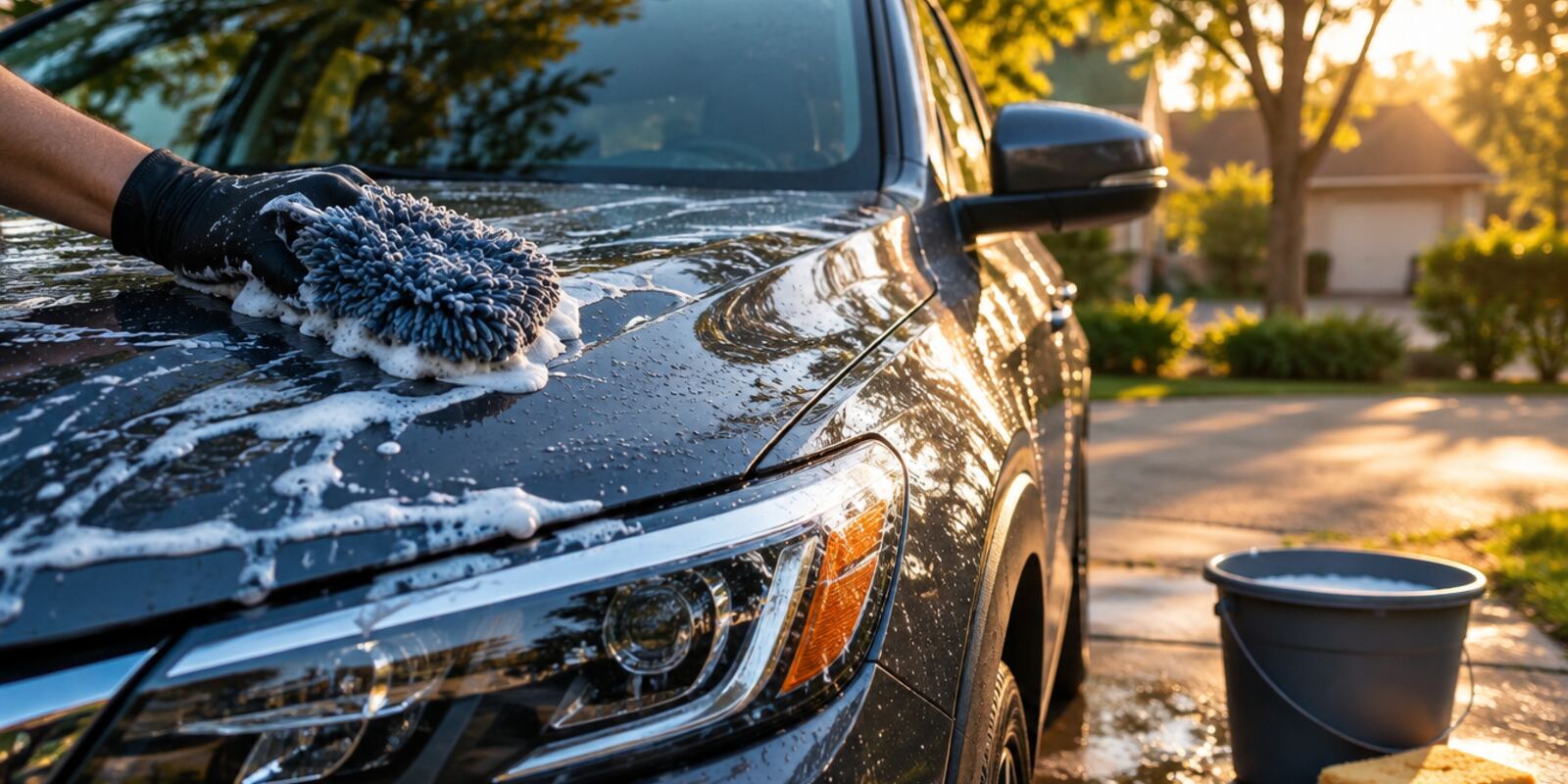
A mobile car wash business washes vehicles at the customer's home or workplace instead of at a fixed location. Many people start with buckets, wash mitts, microfiber towels and a way to get water on site, and grow through repeat customers and referrals. Cities regulate where wash water can go, and some, such as Las Vegas, license mobile car wash businesses, so those are the first things to check.
- Age guide From about 14, with a parent or guardian involved
- Startup cost Low: mostly supplies
- Time A few predictable hours a week, weather permitting
- Skill level Easy to learn; careful, consistent work matters
Free one-page starter sheet (PDF)
This article is general information for founders, not legal, tax, or financial advice. Rules, fees, and filing requirements vary by state and change over time. Nothing here creates a professional relationship of any kind. Confirm anything that affects your business with your state's filing office and a qualified attorney or accountant before you act on it.
Many young founders involve a parent or guardian from the start, since rules about contracts, bank accounts and online accounts often depend on age.
What is a mobile car wash business?
A mobile car wash business brings the wash to the car. Instead of customers driving to a fixed site, the founder travels to a driveway, an apartment lot or a workplace and washes the vehicle there, usually by hand. Because there is no building to rent, startup costs are mostly supplies, which is why the idea appears so often on lists of low-cost businesses for young people. A deeper clean that includes polishing and interior reconditioning is usually called detailing, and has its own guide.
How do you start a mobile car wash business?
The order below is a typical flow, not a rule. Some founders price before they practice, and some skip steps until the first customer asks.
-
Practice on family cars first
Many people start with their own family's cars to learn how long a wash takes, which products work and what finish they can deliver every time.
-
Decide what a wash includes
Write down exactly what each service covers, such as an exterior hand wash, an interior clean or both, so every customer gets the same thing.
-
Plan the water
A hose and the customer's tap is the simplest setup. Cities set rules on where wash water may go, so many founders find out what applies, and what the property owner allows, before the first job.
-
Work out a starting price
Add up the supplies used per car, how long one car takes including travel, and what an hour of the founder's time should be worth. The result is a starting point that can change after the first few jobs.
-
Check the paperwork with an adult
Registration, insurance and tax questions often depend on age and location. A parent or guardian, the city or county business office and an accountant can say what applies.
-
Find the first customers
Neighbors, family friends and local shops are where many young founders begin. A clear, friendly message with a few before and after photos usually does the job.
What do you need to start a mobile car wash?
Most young founders begin with a short list and add equipment only once customers are asking for more.
Many people start with
- Two buckets and a car-safe soap
- Wash mitts and microfiber drying towels
- A hose, or a way to carry water
- A phone for booking and before and after photos
Often added later
- A portable water tank or a wash mat that captures runoff
- A wet and dry vacuum for interiors
- Wax, polish and other detailing supplies
- Business insurance and simple branding
Is a mobile car wash a good fit for you?
Often a good fit if you
- like outdoor, hands-on work and finishing a job properly
- can name a few neighbors or family friends as possible first customers
- can spare a few predictable hours a week
Worth thinking twice if you
- would find weather-dependent income stressful
- have no adult who can help with transport and supplies
- live somewhere with limits on washing vehicles outdoors
Where does the wash water go?
This is the question that surprises many beginners. Water running off a car carries soap, dirt and oil, and storm drains usually lead straight to local waterways, not to a treatment plant. The EPA’s fact sheet on vehicle washing says outdoor car washing can cause detergent-rich water to flow into storm drains, and notes that Fairfax County, Virginia, has an ordinance that prohibits unpermitted commercial car wash water from entering the storm drain system or streams. The City of San Diego states that it is illegal to discharge polluted water from mobile business activities, including mobile detailing, into its storm sewer system.
In Nevada, Reno’s environmental guidance for businesses says most outside drains are storm drains that feed directly to the Truckee River or other water bodies, and the Las Vegas Valley stormwater program says stormwater travels untreated to Lake Mead. Northern Nevada’s Truckee Meadows storm water handbook (published in 2007) describes mobile vehicle and equipment washing as an activity that must use a wastewater capture system or a direct connection into the sanitary sewer system with a pretreatment device, and its recommended practices include covering nearby storm drains, using wash pads to capture water and not discharging wash water to the storm drain system. Handbooks age and local rules change, so the city or county and the local sewer utility are the places to confirm what applies.
How do mobile car washes work out a price?
Pricing is arithmetic more than a guess. A common approach is to add the cost of supplies for one car to the time one car takes, including travel, multiplied by the hourly pay the founder wants, then compare the result with what nearby businesses charge. Many founders adjust after their first handful of jobs, once they know how long a car really takes. Prices vary a great deal by place, so this guide gives no figures.
What rules might apply to a mobile car wash?
The details depend on the city, county and state, which is why a quick call to the local business office is a common first step.
- Water. Covered above. Many places treat unauthorized discharges to storm drains as violations. In Southern Nevada, the Southern Nevada Water Authority also publishes a water-use rule: it says mobile car washing is allowed if the company uses a high-pressure, low-volume sprayer and less than 10 gallons of water per vehicle (as of October 2026).
- City licenses. Some cities license mobile washers specifically. The Las Vegas Municipal Code has a chapter for “mobile car wash/auto detail” businesses (Chapter 6.54) that calls for a city license, a separate license for each additional vehicle, and written permission from the property owner or tenant to work at a location, and it bars washing a vehicle on a public street, among other conditions (code current through January 2026). Other cities differ.
- Registration and zoning. The SBA says local governments determine registration, licensing and permitting requirements, and that zoning rules can apply even to home-based businesses.
- Insurance. Customers’ cars are someone else’s property. Insurance regulators warn that a homeowners or renters policy may not cover a home-based business, and Triple-I, an insurance education group, says a personal auto policy is designed for personal rather than commercial use of a vehicle, which can matter if a family vehicle carries supplies. An insurance agent can explain what policies exist for this kind of work.
- Age. Rules about contracts, bank accounts and payment apps often depend on age, which is one reason many young founders involve a parent or guardian from the start. The Business Ideas guide covers that in more detail.
- Federal child labor rules. These are a separate question and concern employees. The U.S. Department of Labor’s rule for 14- and 15-year-old employees lists “car cleaning, washing and polishing by hand” among permitted work, excludes work with pits, racks or lifting apparatus, and lists the operation of motor vehicles among prohibited work. Whether a young person counts as self-employed or as an employee depends on the facts, and state rules can be stricter, so families who are unsure often ask their state labor agency.
Questions to ask your city or county
People commonly put questions like these to the local business office. The list is not complete, and the answers vary by place.
- Does the city or county ask a mobile car wash to hold a license, and is a separate license needed for each vehicle?
- Where may wash water go, and when does it count as a prohibited discharge to a storm drain or street?
- Is written permission from the property owner or tenant needed to wash at a customer's address?
- Are there limits on washing vehicles on a street, near storm drains or during water restrictions?
- Does the neighborhood or homeowners' association set its own rules for service providers?
What can go wrong?
The honest answer is that the work is seasonal and weather-dependent, that cars come in every condition, and that a scratch or a stain becomes the founder’s problem. Water rules can also catch beginners off guard, because wash water that runs from a driveway into the street can end up in a storm drain. Careful technique, clear expectations about what is included, a plan for the water and a parent or guardian who understands the paperwork matter more than fancy equipment.
Frequently asked questions
How do you start a mobile car wash business?
Most people start by practicing on family cars, deciding what a wash includes, planning where the water comes from and goes, working out a price and finding a few first customers. Local rules on water runoff, business registration and insurance vary, so many founders check them early and involve a parent or guardian.
What equipment is needed for a mobile car wash?
Many people start with buckets, car-safe soap, wash mitts, microfiber towels and a hose or another way to get water on site. Equipment such as a portable water tank, a wash mat that captures runoff or a wet and dry vacuum is often added later as the business grows.
Is a mobile car wash business profitable?
It depends on what a founder charges, how long each car takes, what supplies and travel cost, and how many repeat customers they find, and this guide gives no income figures because they vary by place and person. Many founders work out a starting price from supply costs, time and the hourly pay they want, then adjust after the first few jobs.
Where does wash water go in a mobile car wash?
Storm drains usually lead to local waterways without treatment, so many cities restrict car wash water from entering them. The EPA says outdoor car washing can send detergent-rich water to storm drains, and northern Nevada's 2007 stormwater handbook says mobile vehicle washing must use a wastewater capture system or a sanitary sewer connection. Local rules vary.
More business ideas to look at
Mobile car detailing
Give cars a deeper clean, inside and out, at the customer's location.
Lawn care
Mow, edge and tidy yards for neighbors on a regular schedule.
Pressure washing
Clean driveways, patios and fences with a pressure washer.
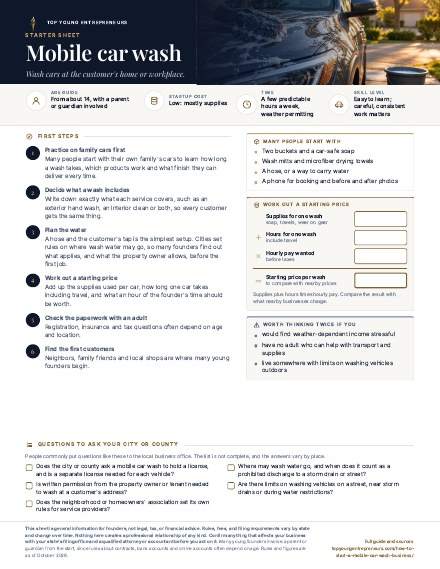
Free download
Mobile car wash: the one-page starter sheet
The first steps, a starter kit, a simple price worksheet and the questions worth asking locally, on one easy-to-print page.
Keep reading
- LLC vs. sole proprietorship How the two structures compare, described without telling you which to pick.
- The LLC formation checklist A map of the typical stages if a business grows into a company.
- How to get an EIN What the IRS's free business number is, who applies for one and the steps, from the IRS's own pages.
- How to start a business in Nevada The LLC steps, state fees, forms and local licenses in one state, with a printable checklist.
- The best states to start a business in 2026 A sourced comparison of state taxes and filing fees.
- Founders we have profiled Real people who built companies young, independently verified.
- How Top Young Entrepreneurs works Our editorial standards and how we source facts.
This article is general information for founders, not legal, tax, or financial advice. Rules, fees, and filing requirements vary by state and change over time. Nothing here creates a professional relationship of any kind. Confirm anything that affects your business with your state's filing office and a qualified attorney or accountant before you act on it.
Many young founders involve a parent or guardian from the start, since rules about contracts, bank accounts and online accounts often depend on age.
- EPA: Vehicle maintenance and washing, stormwater best management practices (2023): why car wash water and storm drains are a concern
- City of San Diego: Mobile business best management practices: an example of a city rule that names mobile detailing
- Truckee Meadows storm water best management practices handbook (2007): northern Nevada guidance on mobile vehicle washing
- Southern Nevada Water Authority: Understand laws and ordinances: the Southern Nevada water rule for mobile car washing
- Las Vegas Municipal Code, Chapter 6.54: Mobile car wash/auto detail businesses: an example of one city's license rules (code current through January 2026)
- 29 CFR 570.34: Work 14 and 15 year olds may do: federal child labor rule for employees that lists car washing and polishing by hand
- SBA: Apply for licenses and permits: why many small and mobile businesses still register locally
- Michigan Department of Insurance and Financial Services: Home-based business insurance: why a homeowners policy may not cover business activity
- Triple-I: Ride-sharing and insurance Q&A: personal auto policies and business use of a vehicle
Last verified: October 1, 2026. Rules, fees and age limits change, so confirm current details with the source before acting on them. This article is educational, not legal, tax or financial advice.